

Tips for Better Lightning Photography

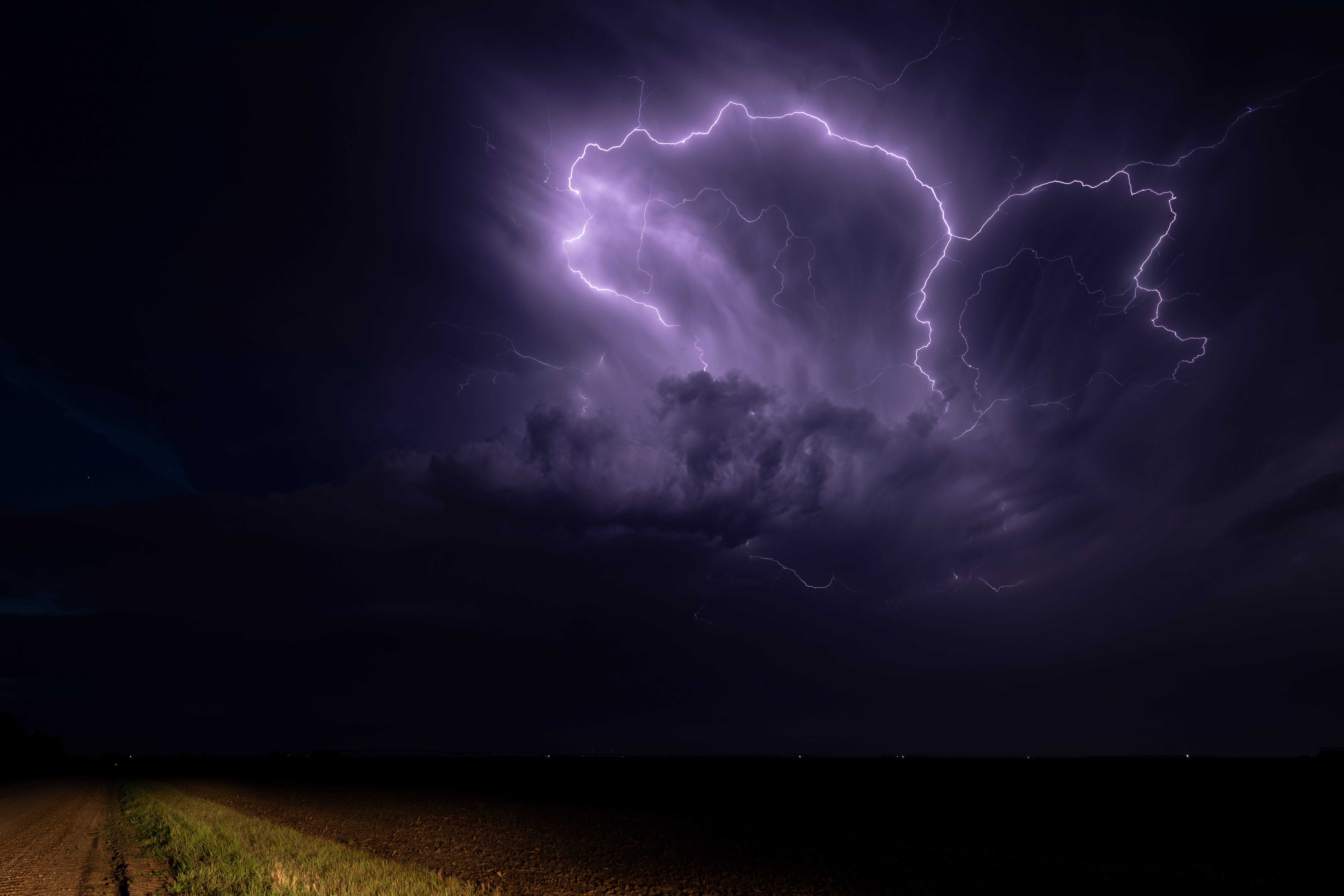
Have you ever been excited about a photograph you captured out in the field, only to be disappointed when you imported to your computer and saw it on a larger screen? Usually, the killer of otherwise great photos is the blurriness or missed focus you did not see on the back of the camera. I know that has happened to me many times. After chasing the May 2008 tornado that had devastated Parkersburg, Iowa, I was seriously disappointed in how my Sony P100 point-and-shoot camera had performed. Nearly every image suffered from motion blur with several unusable. A reality all the more painful since I had just sold my Canon 20D DSLR a couple of months prior. I bought a Canon 40D kit with the 28-135mm lens the next day. The 10-megapixel 40D and 28-135mm lens were all I used for the next 10 years until eventually upgrading to my first full-frame sensor camera, the Canon 6D Mark II. Despite using a heavier DSLR camera and lens with optical image stabilization, I was still punished with the occasional blurry photo. Lightning photography I found to be especially problematic. One failed image, in particular, stands out to me. At sunset, I was photographing a retreating line of storms in south-central Iowa with a brilliant rainbow and mammatus clouds under the rear anvil of the storm. When BAM, a brilliant bolt struck perfectly adjacent to the rainbow. Convinced I hit the jackpot, I was again sorely disappointed when I viewed the series of images back home. Despite using a tripod, these images still came out blurry on one-second exposures. Through trial and error, I have since learned how to combat blurriness in most of my storm photography.
Wind was the assassin that killed my lottery-winning image. Despite attempts to shield my camera and tripod from the wind, there was just enough movement to ruin the photograph. I would eventually learn that leaving a neck strap on your camera makes it virtually impossible to get a sharp image in the wind. I would suggest removing the neck strap all the time, or consider a quick-release option such as the Peak Design Slide Lite strap. With two quick pinches, you can remove the neck strap after you've mounted your camera on your tripod. When you’re ready to pack up, locking the Peak Design neck strap back on is even easier.
Storms are inherently windy. The best viewing angles for storms also tend to be the windiest positions. Talking supercells, the best positions for lightning tend to be from the southeast swinging around to the back or west side of the storm. Storms grow by ingesting warm air from the east to south, pulling in strong inflow winds. They can also exhale with incredibly strong rear flank downdrafts to the west/southwest side of the storm. The RFD can be very dangerous, it is often associated with driving rain and large hail. Not to mention winds that can reach 100 mph. Keep in mind, that car doors facing winds of even 50 mph can be very difficult to open. Doors with a larger surface area like on pickup trucks and SUVs can be nearly impossible to open. Keep this in mind with pulling over on a narrow, steep shoulder in the event you have to re-enter your vehicle on the passenger side. When storms die or change character to a worst first storm, they turn outflow dominant, which can lead to gusty winds out ahead of the advancing storm to the east/southeast. The northeast to northwest side of storms are pretty much shrouded in rain and often lack much definition unless you are miles away looking at a discrete storm.
All storms are different, that’s part of the joy I have chasing after twenty years. Some storms provide an opportunity to photograph them rain-free for an hour or more, while others give you a five-minute window to attempt to steal some photographs. With these factors considered, it’s important to have a Goldilocks tripod. Too big and heavy of a tripod makes deployment difficult and might discourage you from even using a tripod. Compact travel tripods might be nice for hiking and landscape photography, but they are usually too light for long-exposure storm photography. I recently bought and returned the often recommended Peak Design 60” travel tripod because it was just a tad too unsteady and took a long time to extend the four leg sections. I use what I consider a mid-weight Manfrotto 055XPROB aluminum tripod. It’s fast to deploy with only two leg extensions that tend to fall under their weight. With any brand, I would prefer legs that use a locking lever instead of a twist lock, again, for speed of deployment. Storms can sneak up on you fast, so I consider speed with all of my equipment choices. Speed is also important to be ready for the opportunity you are attempting to capture. Tornadoes, rain-free views of structure, or a lightning barrage are often fleeting moments in time.
At the risk of slowing you down, there is one other piece of advice I have for long-exposure lightning photography. Make your already sturdy tripod even more rock-steady with an anchor weight. I use a Leofoto RB-2 tripod weight anchor bag that attaches to the tree legs of my tripod. I then place a 10 lb. weight plate in the bag for a truly solid base for long exposures. You can buy inexpensive individual weight plates or dumbbells at used sporting goods stores. Utilize something heavy you may already carry with you and try a ball-hitch receiver. Be mindful though, that having an empty anchor bag attached will act as a parachute and cause even more blurriness in your photos. Along the same idea, some tripods have a hook on their center column to add a sandbag or camera bag for added weight. This would be a fine idea on a calm foggy morning, but winds will turn that type of anchor into a pendulum and ruin your images.
Finally, I’ll briefly touch on camera settings for lightning photography. For close bolt-worthy photographs, I set my camera to ISO 100 or the lowest native value, and the aperture is usually f/8 down to f/11. The exposure time or shutter speed is the number that I vary depending on the amount of residual light in the sky or clouds. In twilight, the shutter speed is usually 8-15 seconds and 20-30 seconds in darkness. Distant storm clouds with cloud-to-cloud or cloud-to-air lightning will usually require a much higher ISO of 1600-3200 and a slower shutter speed of only a few seconds. Distant thunderstorms with more residual light in the night sky take a little more experimentation with exposure. I use autofocus to focus on the horizon line or distant wind turbine, etc., and then lock the lens to manual focus. Review your first images for exposure and zoom in to inspect focus and sharpness. If your camera has an intervalometer, rely on this method to release the shutter as opposed to pressing the button. A two-second timer will also work in a pinch. Likewise, if your camera connects to an app on your smartphone, that would make for a convenient shutter release with the added safety of being able to fire off shots from inside your vehicle. I added reflective tape to my tripod legs in the event someone might pull over and run into my unattended tripod and camera.
Daytime lightning photography requires a lot of patience. Even the darkest thunderstorms have a lot of light left to enter your camera, so very long exposures are out of the question even with a closed aperture of f/22. In 2024, I’ll be adding a neural density (ND8) filter to my kit for daytime lightning photography. This filter lowers the amount of light reaching the sensor by three full stops, allowing longer exposures on a tripod. You might be wondering about lightning triggers. Well, I’ve never used one, and I have heard mixed results from those chasers who do use them. So, I have no plans to purchase one anytime soon.
In the quest for capturing flawless storm photographs, my journey has been marked by a series of lessons learned from disappointments. I've grappled with the perennial issue of blurriness, often caused by unforeseen factors such as wind and overlooked camera accessories like neck straps and shaky sticks. Adapting my equipment and techniques over two decades, I've realized the necessity of a solid tripod, stable setups using anchor weights, and meticulous adjustments to camera settings for long-exposure lightning photography. While each storm presents a unique challenge, demanding patience, my purpose remains driven by the relentless pursuit of that perfect, focused moment amid nature's unpredictable canvas.